
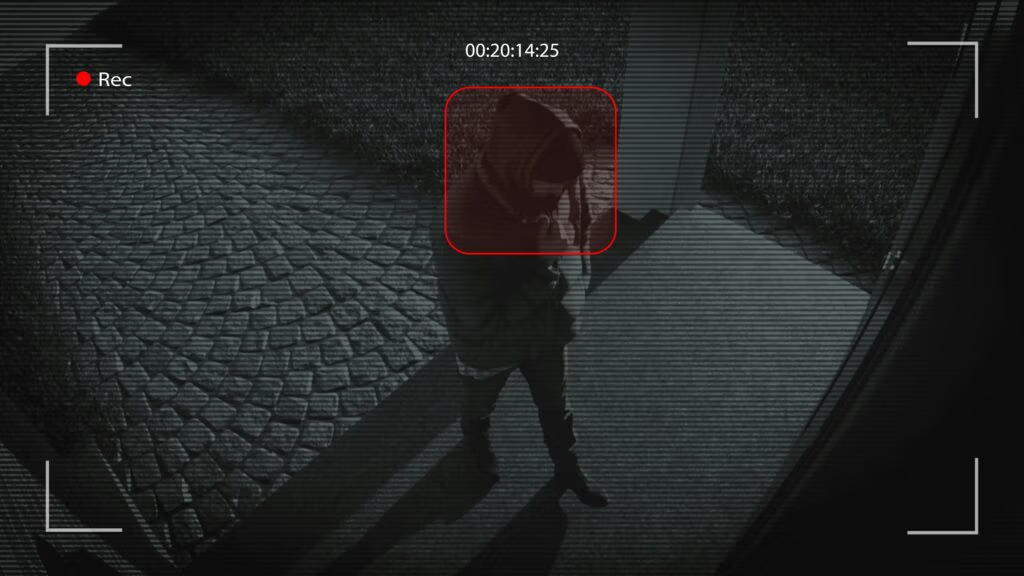
People searching for ways to protect their home or business often land on the same question. Does security film actually work? The honest answer is nuanced. Security film does not make glass unbreakable. What it does is buy critical time, and in burglary prevention, time is everything. Understanding how break-ins actually happen makes it clear why that extra time matters so much.
How Burglars Actually Operate
Burglary is largely a crime of speed and opportunity. The average break-in lasts between 8 and 12 minutes from entry to exit. Burglars are not looking for a challenge. They want fast, easy access, and they move on quickly if resistance slows them down.
Window entry is more common than most people realize. According to FBI data, 23% of burglaries occur through first-floor windows, making them the second most common entry point after doors. Ground-floor glass, sliding patio doors, and storefront windows are all priority targets.
Research from the University of North Carolina surveyed 422 convicted burglars and found that 83% check for security measures before attempting a break-in. Critically, 60% said they would move on to an easier target if they encountered resistance. The deterrence principle is real. Making entry harder or slower is often enough to make a property not worth the risk.
What Security Film Actually Does
When someone strikes an unprotected window with a hammer, rock, or crowbar, the glass shatters and creates an immediate opening. Entry takes seconds.
Security film changes that outcome significantly. The glass still breaks on impact. What changes is what happens next. The film holds all the shattered fragments bonded together within the frame. The window cracks and fractures but does not create an opening. The intruder cannot push through or climb in.
Getting through a security-filmed window requires sustained, repeated strikes to tear the film itself. That process creates noise and takes meaningful time. Burglars relying on a quick smash-and-grab cannot operate that way. The resistance forces a choice: keep trying loudly and visibly, or abandon the attempt and find an easier target.
The Importance of Layered Security
Security film works best as part of a complete security approach, not as a standalone solution. An alarm system paired with window film is significantly more effective than either one alone.
Here is why the combination matters. Film delays entry while the alarm responds to the attempt. The noise created by repeated strikes draws attention. Alarm monitoring services dispatch a response. That sequence works in favor of the property owner when film creates the delay needed for intervention to arrive.
The UNC Charlotte research on burglar behavior is instructive here. A majority of burglars said they would abandon an attempt upon discovering an alarm. Film helps ensure the alarm has time to do its job before entry is achieved.
Adding motion-activated lighting and visible security cameras strengthens the layered approach further. Visible deterrents reduce the likelihood of an attempt. Film protects against those who attempt entry despite visible deterrents.
Film Thickness and What It Means
Not all security film performs equally. Eight-mil film is the accepted minimum for meaningful security performance. Twelve to fifteen-mil film provides higher resistance and is appropriate for elevated-risk locations.
Thicker film requires more sustained effort to breach. A professional assessment of a specific property helps determine which thickness is appropriate for each window and risk level. A sliding glass door in a ground-floor apartment warrants different film than a small bathroom window on an upper floor.
Real-World Applications
Residential properties benefit most on ground-floor windows and sliding glass doors. Patio doors are a particularly common vulnerability. Security film holds shattered glass within the door frame, preventing an intruder from sliding it open after breaking the glass panel.
Commercial applications address a different threat profile. Storefronts are frequent targets for smash-and-grab theft, particularly those displaying electronics, jewelry, or pharmaceuticals. Unprotected storefront glass allows a thief to break through and grab merchandise in seconds. Film forces a sustained effort that most smash-and-grab perpetrators are unwilling to make. The delay collapses the business model of that type of crime.
Additional Benefits Beyond Security
Security film delivers practical benefits beyond intrusion resistance. During storms, film holds glass together rather than allowing dangerous shards to scatter. That same property protects occupants when glass breaks accidentally from a child or pet running into a door or window.
Premium security film also blocks over 99% of UV radiation, providing the same interior preservation and health protection benefits found in standard window film. Protection against sun damage is an everyday bonus alongside the security function.
What Installation Requires
Professional installation is not optional when film is intended for security purposes. The way film attaches to the window frame is critical to its performance under impact. Properly anchored film that extends to and bonds with the frame holds far better than film that covers only the glass surface.
Frame condition matters as well. Film performs as well as the frame it is bonded to. A compromised frame limits the performance of even the best film. Professional installers assess structural integrity as part of the installation process.
The Cost-Benefit Calculation
Professionally installed security film typically runs $7 to $15 per square foot. Full ground-floor window coverage on a typical home generally falls in the $1,500 to $3,000 range.
The FBI places the average loss per residential burglary at approximately $2,661. That figure covers only stolen property. It does not account for property damage, replacement costs, insurance implications, or the emotional impact of a violation of personal space. Preventing a single successful burglary often exceeds the entire cost of installation.
Insurance providers frequently offer discounts for verified security measures. A consultation with your insurer is worth the conversation.
Schedule Your Security Assessment
Every property has specific vulnerabilities. A professional assessment identifies which windows and entry points pose the greatest risk and which film thickness and installation approach provide the right level of protection. Contact us for a free consultation and take the first step toward meaningful, layered window security.