

Every retail store owner pictures the same nightmare. A brick, a hammer, an open door, and thirty seconds later the shelves are empty. That fear spikes every fall as holiday inventory fills the floor. Here’s how two different storefronts might handle the same attack, and why the outcome comes down to one material choice.
Two Storefronts, One Night
Picture two stores on the same commercial strip. Store A sells sporting goods. Store B sells electronics. Both carry high-value merchandise. Both have alarms and cameras. Only one has security window film.
At Store A, a crew hits the front glass with a hammer. The panel shatters completely on the first strike. Glass falls away, leaving a full opening. Three people step through and start grabbing product. Within a minute, they’re gone. Police arrive minutes later to an empty display case and a shattered storefront. The store faces merchandise loss, emergency glass replacement, and a day of lost sales. This isn’t a rare event. Many stores get hit more than once in a year.
At Store B, the same attack looks different. A crowbar strikes the glass. It cracks, but it doesn’t fall. The film’s adhesive layer holds the fragments together, turning broken glass into a bonded barrier. A second strike widens the damage. A third starts to tear the film itself. By now, close to a minute has passed with no entry. The crew glances at each other and walks away. Police document an attempted break-in with zero merchandise loss. The only cost is film replacement, a fraction of what Store A paid.
Why Seconds Decide Everything
The difference isn’t the alarm. Both stores had one. It isn’t the cameras either. The difference is what happens to the glass in the first few seconds of impact. Unprotected glass gives way almost instantly, creating an opening fast enough for opportunistic theft. Film-protected glass resists, and resistance buys time. For most smash-and-grab crews, working fast and staying unseen matters more than the merchandise itself. A delay of even a minute can be enough to trigger abandonment.
This matters beyond any single incident. Organized retail crime groups scout locations before committing to a target. Retailers report that transnational groups are now involved in a majority of their theft incidents, and violence during these events has been rising year over year. Groups plan around risk versus reward. A storefront that visibly resists during a test run often gets crossed off the list in favor of an easier target nearby.
Why October Matters
Fall is when retail inventory value peaks for the year, as holiday stock fills shelves ahead of the season. It also brings longer dark hours, giving after-hours crews more cover. Shorter days mean more of the closing and overnight hours happen in darkness, which is exactly when smash-and-grab crews prefer to operate. Combine that with fuller shelves and a busier staff, and October through December becomes the highest-risk stretch most retail stores face all year.
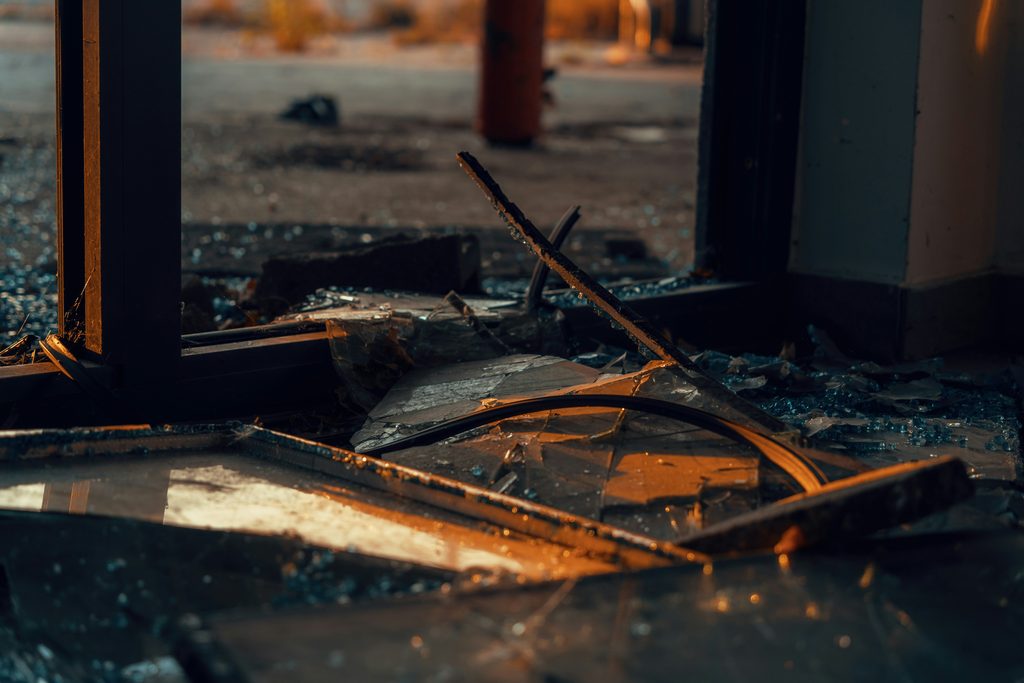
Film installed before inventory arrives protects that inventory from day one, rather than after a first incident forces the decision. Waiting until after a break-in means paying for glass repair, lost merchandise, and film installation all at once, on a much tighter timeline.
What to Look For
Not all film performs the same way. Thickness matters: 8 mil is the baseline for meaningful resistance, while 12 to 14 mil suits higher-value retail stores carrying electronics, jewelry, or other easily resold goods. Clarity and UV protection vary by product line too, so ask what else the film does beyond impact resistance. Installation matters just as much as the film itself.
Film anchored into the frame resists being pushed inward under sustained pressure. Film that simply floats on the glass surface doesn’t hold up the same way under a real attack, since the glass unit itself can still be forced loose even if the film stays intact. Ask any installer to explain their anchoring method before you sign a contract.
The Window to Act Is Now
Every week between now and peak holiday inventory is a week your storefront sits exposed. Security film won’t stop every attempt, but it changes the odds, and for most opportunistic crews, odds are exactly what decides whether they walk away. Get a quote now, before inventory arrives and before your storefront becomes the easier target on the block.